
Blog
Choose Life
A Near Ending That Became a Beginning
“Tell me, what is it you plan to do with your one wild and precious life?”
— Mary Oliver
Wooosh.
A bottle tore through the air inches from my face, missile-fast, then shattered somewhere behind me. A pickup truck roared past, three young men laughing, their empty bottle turned into a joke at a hitchhiker’s expense. They didn’t slow down. They didn’t look back. They disappeared into the Alaskan dusk.
I stood frozen on the shoulder of a two-lane highway in the middle of nowhere. It was August 1983. I was nineteen years old, six thousand miles into a hitchhiking journey that had begun in Hershey, Pennsylvania, wound through Los Angeles, and was now carrying me north toward Fairbanks.
The fear spiked and then drained just as quickly. I wasn’t hurt. I wasn’t in danger anymore. But the adrenaline lingered, buzzing through my body, reminding me how close I’d come to not standing there at all.
I decided not to go any further that night.
The air was cool but gentle. Mountains rose in quiet silhouettes all around me. I walked a good distance from the road while there was still light, found a flat patch of ground, and rolled out my tarp and sleeping bag. No tent. I felt safe enough. I opened a tin of sardines with a bent spoon and ate slowly, staring up at the sky, replaying the moment.
Two inches the other way, I thought. Two inches, and none of this would exist for me.
Lying back in my sleeping bag, I watched darkness arrive late, the northern sky filling with stars brighter than any I’d known. I tried to imagine how long their light had traveled to reach my eyes, whether some of those stars even still existed. A speck on Earth. Earth, a speck in the universe. And somehow, here I was.
Why am I here?
Not in Alaska. On Earth.
Does life have meaning?
If so, what is mine?
This journey had made me acutely vulnerable. Nearly every day, sometimes for hours, I stood with my thumb out, trusting strangers to stop. At night, I slept under open skies, guessing where safety might be found. I’d left home with about three hundred dollars, no credit card, no phone. Why did the image of mountains inspire this kind of boldness? Why did movement feel necessary? What was I running from—or toward?
As I lay there, still shaken, another memory surfaced.
A year earlier, under a different starry sky, I had sat on a grassy hillside in Lancaster County, Pennsylvania, listening to Tony Campolo speak to thousands of people gathered for an outdoor Christian festival. His booming voice carried humor and urgency in equal measure. At one point, he described a sociological study—at least, that’s how I remember it—in which people over ninety-five were asked what they would do differently if they could live their lives again.
Their answers, he said, fell into three themes.
They would have taken more time to reflect, to live consciously, appreciating their relationships with others and other treasures in their lives.
They would have taken more risks in pursuit of their dreams.
They would have invested more in building something that would outlive them and improve the lives of others.
I never read the study. I don’t know if it even existed. It didn’t matter. Those three regrets lodged themselves somewhere deep inside me. They followed me now, lying under the Alaskan sky, humming beneath the questions I couldn’t shake.
And then my thoughts drifted to something closer. Much closer.
Five weeks earlier.
I was lying on the concrete floor of my father’s garage. The car was running. The garage door was closed.
I wasn’t crying. I wasn’t panicking. I wasn’t angry. I was exhausted. Hollowed out by a weight I didn’t know how to name.
That weight had been building for years.
My grandfather—whom we all adored—had died suddenly of a heart attack when I was twelve, just as my parents’ marriage began to fracture in ways that would stretch on for years. My mother eventually moved in with her own mother, taking my three younger siblings with her. My older sister had already left home at fifteen, after years of conflict that were heart-wrenching for all of us. I stayed with my father. What had once been a noisy, imperfect, loving family became something divided and unstable, held together by obligation and strained communication.
I didn’t know what to do with the sadness, the anger, or the confusion. So I learned how to numb it.
From ninth grade on, drugs and alcohol became a way to manage pain I didn’t yet have language for. There were multiple brushes with the law—underage drinking, selling marijuana, repeated meetings with police and detectives. I kept working. I kept showing up. I kept functioning. And I kept getting lucky.
Had I been Black, or poor, or unknown to the authorities, I would certainly have been sent to a juvenile detention center. Instead, I was given chance after chance. I was protected by privilege I hadn’t earned and didn’t yet fully understand.
By the time I was seventeen and eighteen, I had settled into a strange balance. I had friends I loved, I held down two steady jobs at a time, and detailed cars on the side. I stayed out of trouble. I was in a serious relationship that was both grounding and volatile. I rode my 1966 Harley-Davidson Electra Glide across the country twice. Motion helped. Work helped. Distraction helped. None of it healed what was underneath.
When that relationship finally ended, one of the last things holding things together gave way.
I knew, intellectually, that I was fortunate. I knew others had it far worse. But emotionally, I felt empty. I couldn’t see a future worth moving toward. The pain felt endless, and I wanted it to stop.
I had a plan.
As the garage filled with exhaust and the air grew heavy, something unexpected happened. A sudden, vivid image broke through the fog: mountains. Vast, majestic, soul-stirring mountains like the ones I’d seen as a boy on a family trip out west, and again as a teenager crossing the country on my motorcycle.
The image grabbed me.
Go. Go see them.
It wasn’t a voice, exactly. More like a knowing. I had a couple hundred dollars. I knew how to travel cheaply. I had friends in Colorado who would take me in. A future—however uncertain—snapped back into view.
That moment—call it grace, instinct, or sheer stubborn will—saved me.
Within days, I was on the road. Rides came easily. Colorado in two days. California, not long after. In a friend’s place, I saw a poster of Mount Denali and felt the pull again. Alaska. Now. I packed my bag and stuck out my thumb.
Somewhere in Canada, a man picked me up and ended up driving with me for over a thousand miles. Along the way, we stopped at a commune delivering supplies. Families lived there together with their children, bound by shared responsibility and purpose, helping one another survive harsh winters. It struck me how much strength came from belonging, from choosing community over isolation.
Now, lying under the Alaskan sky, I realized I was living inside the very vision that had pulled me back from the edge.
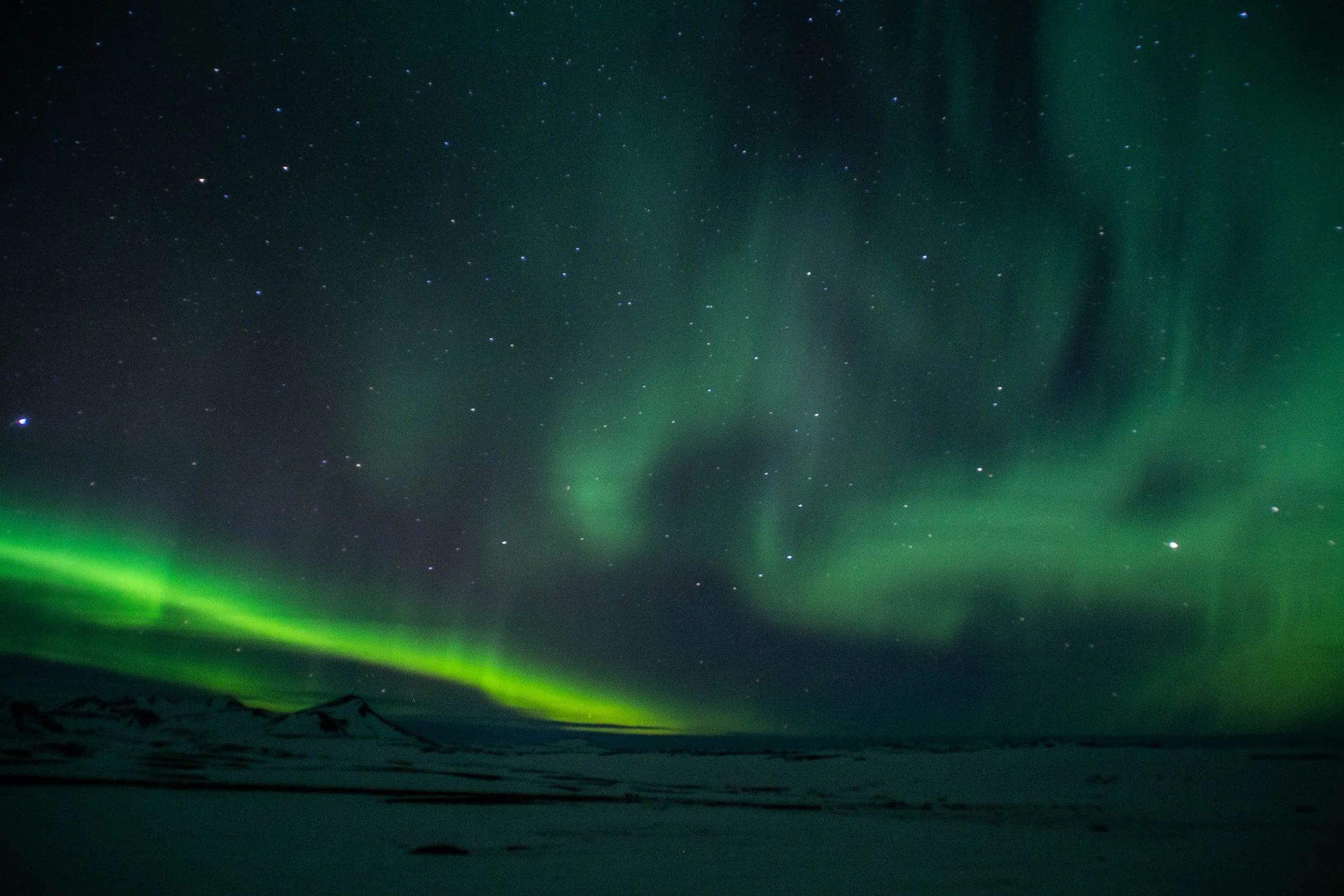
And then the sky began to move.
Green and violet waves rippled across the darkness, dancing above the mountains. The aurora borealis. I sat up in my sleeping bag, stunned. The bottle. The truck. The near miss. All of it fell away. This light—this impossible beauty—was mine to witness.
I felt peace. Wonder. A quiet sense of power. Purpose, not yet defined, but unmistakably present.
There’s a reason I’m still here, I thought.
The world holds immense suffering. Cruelty. Injustice. Grief that breaks people open and leaves them searching for ways to numb the pain. I knew that intimately. But it also holds beauty. Healing. Possibility. That night, under moving light and ancient stars, I began to understand something demanding and straightforward:
We all carry power.
The question is whether we’ll pay attention when life asks us what we’re going to do with it.