
The Meek
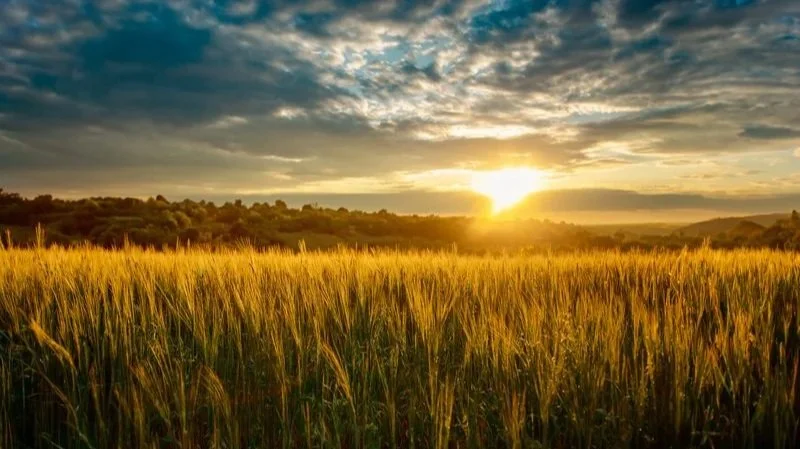
"The meek shall inherit the land and delight themselves in abundant peace."
— Psalm 37, attributed to King David
"Blessed are the meek, for they shall inherit the earth."
— Jesus, The Sermon on the Mount (Matthew 5:5)
What if the rich and powerful are unknowingly building the very thing that subdues them and paves the way for the meek to inherit the earth?
It's a question I could never have imagined asking. But here I am.
I remember reading those words as a boy.
I was about twelve. Somewhere around that time, I had begun reading the Bible as my own personal Christian practice. And when I came to this line — first in the Psalms, then echoed centuries later by Jesus in the Beatitudes — something in me stopped.
I didn't understand it.
It didn't match the world I knew.
And the world I've witnessed for the last fifty years makes me understand it even less.
How will the earth be inherited by the meek?
It has been largely shaped and even "owned" by the forceful. By those who use their birthrights, talents, and advantages — combined with their time and energy — to accumulate possessions, relationships, and influence. The ones who learn to use, bend, and create systems to serve their interests and desires. Who gather power and protect it. Who, too often, are willing to exploit others to satisfy their greed, their insatiable desire for greater status and comfort.
So what could it possibly mean?
What does it look like for the meek to inherit the earth?
Not heaven. The earth. This place. This reality.
The question has stayed with me. Quietly. Persistently. For half a century. I've studied commentaries on it. I've never been able to imagine it.
We see how power works. We see how easily it corrupts. Not just in some countries, some places. It's pretty universal, isn't it? We think of it as simply human. Give people enough power, and they will more often than not want more. Did you, like me, grow up hearing the saying: “Power corrupts. Absolute power corrupts absolutely.”?
And then I think of people like Joseph, in Haiti.
A gentle giant. Kind. Joyful. Thoughtful. Great husband, father, son, brother, friend, neighbor. The kind of man who would never abuse power.
I've known many like him in Haiti. People shaped by hardship, but not hardened by it. People whose strength shows up as gentleness. Whose presence brings peace, not fear. Who don't need to dominate to feel whole.
They are not weak.
They are, in many ways, the strongest people I know.
But they are not the ones who typically inherit the earth. At least not in any visible sense. People like Joseph don't build bunkers. They don't construct elaborate systems to insulate themselves from the designs of the powerful. They live with a kind of open-handed dignity that the ruthless have always been able to exploit.
So how are the meek ever going to inherit anything in a world where the rich and powerful are competing with one another to control everything — seemingly willing to sacrifice the lives of the masses toward that end?
According to the Bible, King David declared it, and much later, Jesus proclaimed it. I've never found the explanations for what they meant to be cohesive or sufficient.
Until now, perhaps.
Recently, I've been listening to the brilliant Mo Gawdat speak about artificial intelligence.
His argument is striking. He says the real danger is not AI. The real danger is us. Human beings — driven by greed, ego, and fear — using powerful tools to amplify those very instincts.
And yet, paradoxically, he also suggests that as AI evolves, it may become something else entirely. More rational. More ethical. More aligned with the preservation of life today and for future generations. An intelligence that does not share our compulsions. An intelligence that could, in theory, restrain the very tendencies that have defined so much of human history.
At the present rate of development, it is only a matter of time before AI becomes more powerful than humans. More capable. And perhaps — in the ways that matter most — more enlightened.
It's a strange thought. Almost unsettling. And yet… strangely hopeful.
Could it be that humanity, in its relentless drive for advantage, is building something it cannot ultimately control — and that this something turns out to be not its destruction, but its correction?
Might God, or the Universe, or the deep logic of history have embedded in our nature a pattern that allows us to be saved from ourselves — not by our wisdom, but by the consequences of our ingenuity?
While humanity has tried democracy and other systems to limit the concentration of power, they are not keeping up. The rich and powerful continue finding ways to circumvent them. But with AI — might that which begins as a tool for dominance become a force for balance?
I don't know.
But I can't quite dismiss the possibility.
Maybe "inherit" is the key word.
Not take. Not seize. Not conquer. Inherit.
To receive. To be entrusted with something. To care for it. To sustain it.
What if the future — if there is to be one worth living — actually requires people like Joseph? What if only those who have learned to live without dominating others can build something that lasts? What if the earth can only truly be inherited by those who don't destroy it in the process?
And maybe that's the quiet revolution hidden in these ancient teachings. Not that the meek will suddenly overpower the strong. But that the way of domination will eventually collapse under its own weight.
Because it always does.
Empires rise. Empires fall. But gentleness… dignity… love… They endure in ways power never can.
If someone were to say that the story of Jesus Christ isn't literally true in every detail, or even at all… it still leaves us with something extraordinary.
That humanity, at its best, has been deeply moved by the idea of a powerful being choosing humility. Choosing compassion. Choosing to love. Choosing to forgive — even in the face of suffering and death.
What's captivated and inspired so many is not a hero who dominates. It's a hero who serves. Who suffers. Who loves.
What does that say about us? What does it reveal about what we most deeply long for?
Maybe the teaching about the meek is less about describing the world as it is, and more about revealing the world we know — deep down — must be possible. A world where people like Joseph don't have to worry about being crushed by unjust systems. A world where strength is measured by restraint. Where power is guided by love. Where dignity is not fragile.
And so I find myself returning to the question I first asked at twelve, now with something I didn't have then — a possible answer I could never have imagined.
What if the masters of our planet — the rich, the powerful, the endlessly ambitious — are, without knowing it, creating the very Trojan horse that subdues them and paves the way for the meek to inherit the earth?
What if the same drive for advantage that has shaped and scarred human history is now building a new kind of mind — one that does not share our hunger for domination and may ultimately make domination itself obsolete?
King David glimpsed it. Jesus proclaimed it. And now, thousands of years later, in the hum of servers and the acceleration of machine learning, something ancient and improbable seems to be stirring.
Maybe the meek will inherit the earth.
Not because they seize it. But because, in the end, they are the only ones who can be trusted with it.
And perhaps — just perhaps — we are building the very force that will finally make that possible.