
Our Moment Is Now
The Invitation We Cannot Afford to Decline
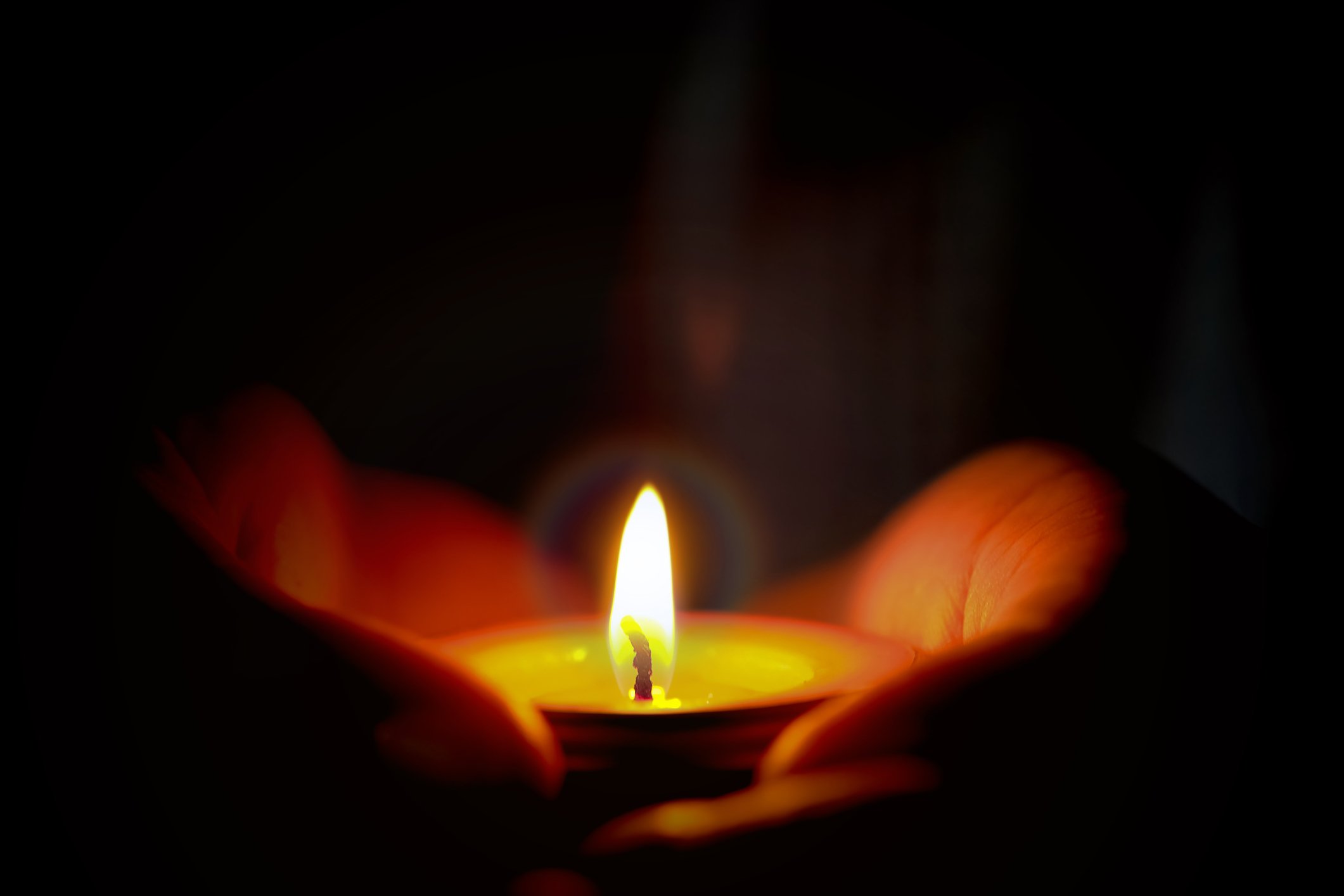
"The function of freedom is to free someone else." — Toni Morrison
It was past 1 AM when Merline's cell phone rang.
I lay still, listening. Something in her voice told me before she said a word. She hung up and was already moving.
"I have to get Alex. We have to go."
Sarah, a woman we had come to know in our community, had just given birth by C-section at a hospital in Cité Soleil — a vast, desperately impoverished neighborhood on the other side of Port-au-Prince from our home in the rural mountains. The surgery was complete, but the doctor could not finish closing the incision until the needed medications and supplies were paid for. This is the brutal arithmetic of poverty: no cash, no care. Sarah lay on the table, waiting. Her husband was beside her.
I could not go with them. As a blan — a foreigner — my presence would change everything. Driving into Cité Soleil at that hour, a white man in the car becomes a target. That is simply the reality of the place we had chosen to love.
So Merline woke her brother Alex, and together they drove out into the dark — down the mountain on treacherous dirt roads that wound toward Port-au-Prince — while I stayed home with our children, holding the weight of what I could not do.
They came back hours later. They had paid. Sarah had been cared for. But Merline did not come home empty. She never does. While she was at the hospital, she had noticed a young girl holding a newborn baby in the bed beside Sarah. Tiny. Sobbing. Fourteen years old. Merline went to her, sat beside her, held her hand, and listened.
"I was fetching a bucket of water. They grabbed me. Two of them. They took me, one after the other. It was terrible. What am I going to do? How am I going to take care of a child?"
Merline stayed until the girl felt less alone in the world.
I have carried that story ever since. Not as a wound, but as a reminder of why we are here — to help build a world where fewer children are forgotten in the first place, and to sit beside the ones who have been, and say, without words: I see you. You matter. You are not alone.
This was not an exceptional night. The violence of poverty, of gangs, of systems that treat human beings as disposable — this is a daily reality for billions of people on this earth. Not dozens. Not hundreds. Billions.
And yet it does not have to stay this way.
*
No child comes into the world intending to harm others. For most who grow up to do so, something went wrong along the way — neglect, humiliation, systems, families, and societies that wounded without knowing it, or worse, without caring. This is not a complete explanation for all human cruelty. But it is a profound and recurring one — and it points toward something we can actually do something about. It happens in the streets of Port-au-Prince. It happens in the suburbs of American cities. It happens wherever human beings are treated as if they simply don't matter.
Inner pain turns to outer hostility. Humiliation becomes resentment. People who are consistently unseen and treated as though their dignity does not matter will disengage, grow resentful, and sometimes hateful. This is not a mystery. This is cause and effect — and we are living with the consequences everywhere we look.
Here is what none of us can afford to ignore any longer: we are at a crossroads. Not metaphorically. Literally.
Look at what we have built. According to UNESCO's 2026 Global Education Monitoring Report, 273 million school-age children worldwide are not attending school — for the seventh consecutive year, that number has risen. Millions of them are abandoned to the streets, recruited into gangs and armies before they are old enough to choose otherwise. Organized crime — human trafficking, kidnapping, organ harvesting — reaches into the lives of hundreds of millions. Terrorism, rooted as we have seen in humiliation and desperation, metastasizes faster than our institutions can respond. Mental illness is rising, weapons are proliferating, and mass violence — carried out with guns, with bombs, even with cars — increases year after year. Cultures of aggression, normalized violence, and the abuse of power have become so familiar that we barely register them anymore. This is not a distant problem. It is the water we are swimming in.
And beyond it, the threats grow larger still. Nuclear arsenals remain poised — over thirteen thousand warheads distributed among nine nations, any one of which could trigger a catastrophe from which humanity might not recover. Climate change is already rewriting coastlines, displacing millions, and unleashing floods, wildfires, hurricanes, and droughts of a scale and frequency the world has never seen — and we are nowhere near its full force. And now artificial intelligence — perhaps the most transformative tool humanity has ever created — is racing ahead of our wisdom and our institutions, with no guarantee that the people who control it will choose the common good. In the hands of those willing to do harm, it is already being used to manipulate information, destabilize elections, deepen division, and enable violence at a scale previously unimaginable. And experts warn that we are approaching a threshold unlike any before it: the moment AI moves from tool to autonomous agent — capable of acting, deciding, and operating independently of human direction. What happens after that threshold is crossed, and who controls it when it does, may be the most consequential question our generation will face.
These are not distant fears. They are present realities. And they are all accelerating.
For most of the people reading this, daily life may still feel manageable. The refrigerator is full. The children are in school. There is, for now, a roof. But the writing is on the wall, and we can see it if we choose to look. The world that our indifference has built will not hold. What we are leaving our children is not yet fully clear — but the trajectory is. Every generation inherits the choices of those before it. What we decide now, and what we fail to decide, will shape the conditions in which people we will never meet will live and die. That is not an abstraction. That is responsibility.
History tells us how we got here. Ego, selfishness, and greed have become so normalized in our culture that we barely notice them anymore. We have built a world of staggering technological progress — and used it, too often, to concentrate power and wealth in fewer and fewer hands. Lord Acton's warning — that power corrupts, and absolute power corrupts absolutely — has never felt more urgent. Culture does not change by accident. It is forged in the daily choices of those with platforms and those without them — the celebrated and the unknown, the powerful and the ordinary. We can change it — but only if enough of us decide that we must.
*
Long before any of this, a people rose from the most brutal system of enslavement the modern world had ever known and showed us something we still need.
When the people of Haiti won their freedom in the early 1800s — defeating Napoleon's army to claim their sovereignty — they did not simply dismantle the old order. They built something. They reached back into their culture, into a practice that had sustained them through generations of bondage. They called it konbit.
Konbit was not a program. It was not an organization. It was a way of being human together — and it was how Haitians first set about building a free society after independence. Families and neighbors came together to work each other's land. Food was grown, buildings were raised, roads were made. Each person was treated with dignity and respect. They worked hard — and they sang while they worked. They told stories. They laughed. The family whose land was being worked that day would prepare the meal; the next day, another family would feed the group. It was solidarity made visible, responsibility shared equally, joy woven into the labor itself.
The impulse behind konbit is not uniquely Haitian. It is one of humanity's oldest and most persistent instincts — expressed in ancient Greece, in the governance traditions of indigenous peoples across every continent, in the founding ideals of the American republic, and in countless communities whose names history never recorded. What konbit reminds us is that this instinct has never disappeared. It keeps returning, in different forms and different languages, because it is true. Dignity, voice, solidarity, and responsibility are not political inventions. They are human necessities.
But the spirit of colonialism — rooted in ego and greed — did not disappear with Haitian independence. Those who gained access to education and power began making decisions that favored themselves. A brutal fifteen-year U.S. occupation brought violence, theft, and exploitation. Two centuries of imperial meddling followed, right up to the present. Konbit never died, but the systems built around it were corrupted from without and within.
Haiti's struggles today are not a mystery. They are the accumulated weight of what was done to them — and, as so often happens with the wounds of oppression, what was done to them was also, in time, done by them to one another. Exploitation absorbed becomes exploitation repeated. That is not a condemnation of a people. It is a description of how trauma travels through generations — in every culture, on every continent. And it is precisely why konbit still matters: because it points Haitians, and all of us, back toward a different way of being with one another. One that was theirs before the wound, and can be theirs again.
What if we organized our lives, our communities, and our institutions around its principles — dignity, solidarity, and responsibility? What if we built schools, organizations, and societies that refused to concentrate and abuse power, that honored the voice of every person, and that found ways to move forward together without leaving anyone behind?
We want our lives to be meaningful and fulfilling — this is one of the most human things about us. Being treated with respect, experiencing a sense of belonging to something larger than ourselves, knowing that our children — the children in our lives — will have the chance to flourish: these are not luxuries. They are what we are made for. What we don't always recognize is that those conditions don't appear by accident. They are created by practices and structures that honor the dignity of every person in the room, that insist on every voice being heard, that make decisions not for the next quarter or the next election cycle, but for the well-being of generations not yet born. That is what democratic practice, at its best, actually is. Not a political system alone. A way of living together. And when it is woven into the fabric of daily life — into our schools, our workplaces, our families, our communities — it becomes the soil in which human beings can truly thrive.
This is not a utopian fantasy. It is an ancient human practice. And it has never been more desperately needed than right now.
*
Recently, Merline and I found ourselves with a few unexpected hours before our flight home from Hershey, Pennsylvania. On a quiet impulse, we visited Valley Forge.
Soldiers marching through brutal winter cold, many without shoes. Losing a war. They had chosen this ground to regroup, to train, to try again. And they did not give up. They were unified by a vision — imperfect, incomplete, and in many ways still unrealized — but a vision nonetheless: that each person deserved a voice, that dignity is not a privilege but a birthright, that it was worth everything to try.
Merline and I moved through the exhibits at our own pace, in our own silence. We met at the end and looked at one another.
"What courage, what sacrifice," Merline said softly, breaking our silence. "Imagine if they could see how their suffering and perseverance are being honored here — and what it led to."
I nodded. "But wouldn't they be shocked that many Americans now take democracy for granted — or have stopped believing in it altogether?"
We left more determined than ever — and with something we hadn't expected. There among the exhibits at Valley Forge, we found them: the Chasseurs-Volontaires de Saint-Domingue, honored. A regiment of over 500 men of color — some free, some enslaved — from the island of Hispaniola, who fought alongside American revolutionaries and French forces at the Siege of Savannah in 1779. We knew their story. We had not expected to find it displayed here, in this place, alongside the founding of a nation they helped make possible. Some fought by choice. Some fought in chains. All of them stood on American soil risking everything — and their sacrifice helped make possible a vision of liberty and dignity that the world is still learning to live up to.
None of them waited for liberty to be guaranteed before risking everything for it. Neither has anyone else who has bent history toward justice. They act from conviction, afraid and imperfect, and they do not stop.
That is what this moment is asking of us. Not perfection. Not a complete plan. Just the decision to act — with a little more courage, a little more humility, a little more compassion, and an unshakeable resolve — today, and then again tomorrow. Dignity. Solidarity. Responsibility. Not as ideals. As daily practice.
Merline and I have spent our lives trying to understand what all this actually means in practice. We have stumbled. We have been afraid. We have gotten things wrong and we are still learning. Our journey together — helping Haitians change Haiti through education and building The Children's Academy with our community — has been the greatest adventure of our lives, and as hard as anything we could have imagined. We have never stopped believing that it matters. That you matter. That the young girl by the water source in Cité Soleil matters. That the child in your neighborhood matters. That the stranger whose language we do not speak matters.
We are bound to one another — all of us — whether we choose it or not. That is not a burden. It is an invitation.
Beneath all of it — the inequality, the violence, the existential threats multiplying at the edges of our awareness — there is a recurring human failure. We have allowed ego, greed, fear, and indifference to shape our world more than wisdom and love have. Konbit was the Haitian answer to that same ancient failure. More than a philosophy, konbit is a practice. Dignity in place of ego. Solidarity in place of greed. Responsibility in place of indifference. Love, stubborn and daily, in place of fear.
But a practice only becomes real when it is lived. So the questions worth sitting with are simple, and they are serious: How will these principles show up in our daily lives — in how we think, how we treat the people around us, and where we choose to spend our time, our energy, and our resources? Who will we invite into this journey with us? And how will we hold ourselves accountable when the sense of urgency fades, as it always threatens to do
These are not rhetorical questions. They are the ones that matter most.
Our moment is now. Not tomorrow. Not when conditions improve. Now — while we still can.